Scalar 2026: Celebrating Functional Programming Fiesta
Back in 2014, our very first gathering in Warsaw sparked a movement that grew into Central Europe’s premier destination for functional programming enthusiasts. This March, we returned to the Polin Conference Centre to celebrate the 11th edition of the Scalar - functional programming fiesta.
Over two intensive days, we showed that even as the industry pivots toward autonomous agents and distributed AI, the core values of Scala, purity, expressiveness, and safety, remain the essential foundation for reliable engineering.
Do you trust your AI agents? And much more
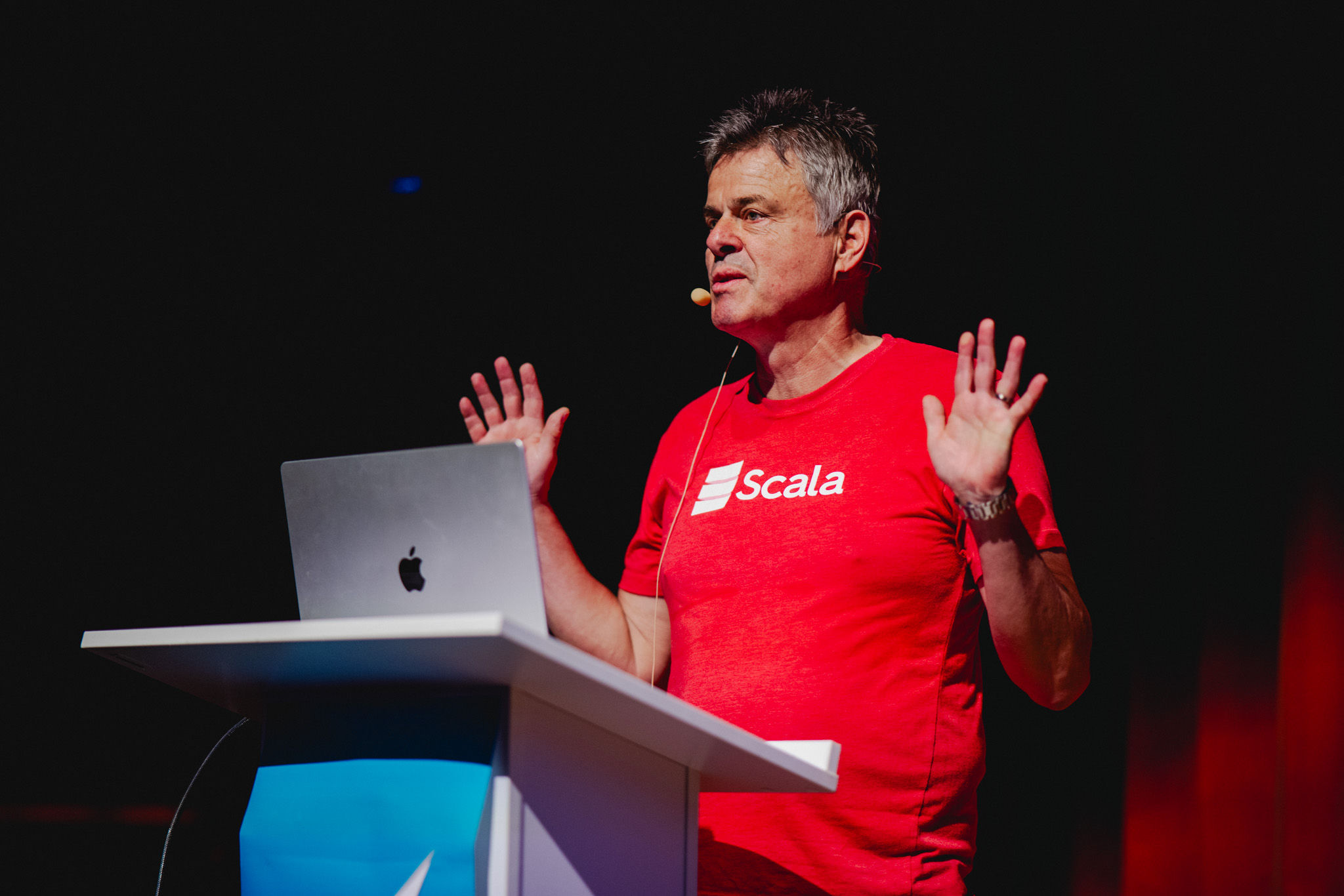
The first day was a masterclass in the ecosystem’s evolution, beginning with a visionary keynote from Martin Odersky (pictured below), the creator of Scala. Martin addressed the pressing question of the AI era: "How can we trust our agents?" He argued we must move beyond simple testing and adopt a systematic approach using types and capabilities to build trust directly into the language.
This ambitious tone was grounded in the practical roadmap of the Scala 3.9 LTS era by Piotr Chabelski, who provided a framework for navigating upcoming releases while maintaining the stability the community values.
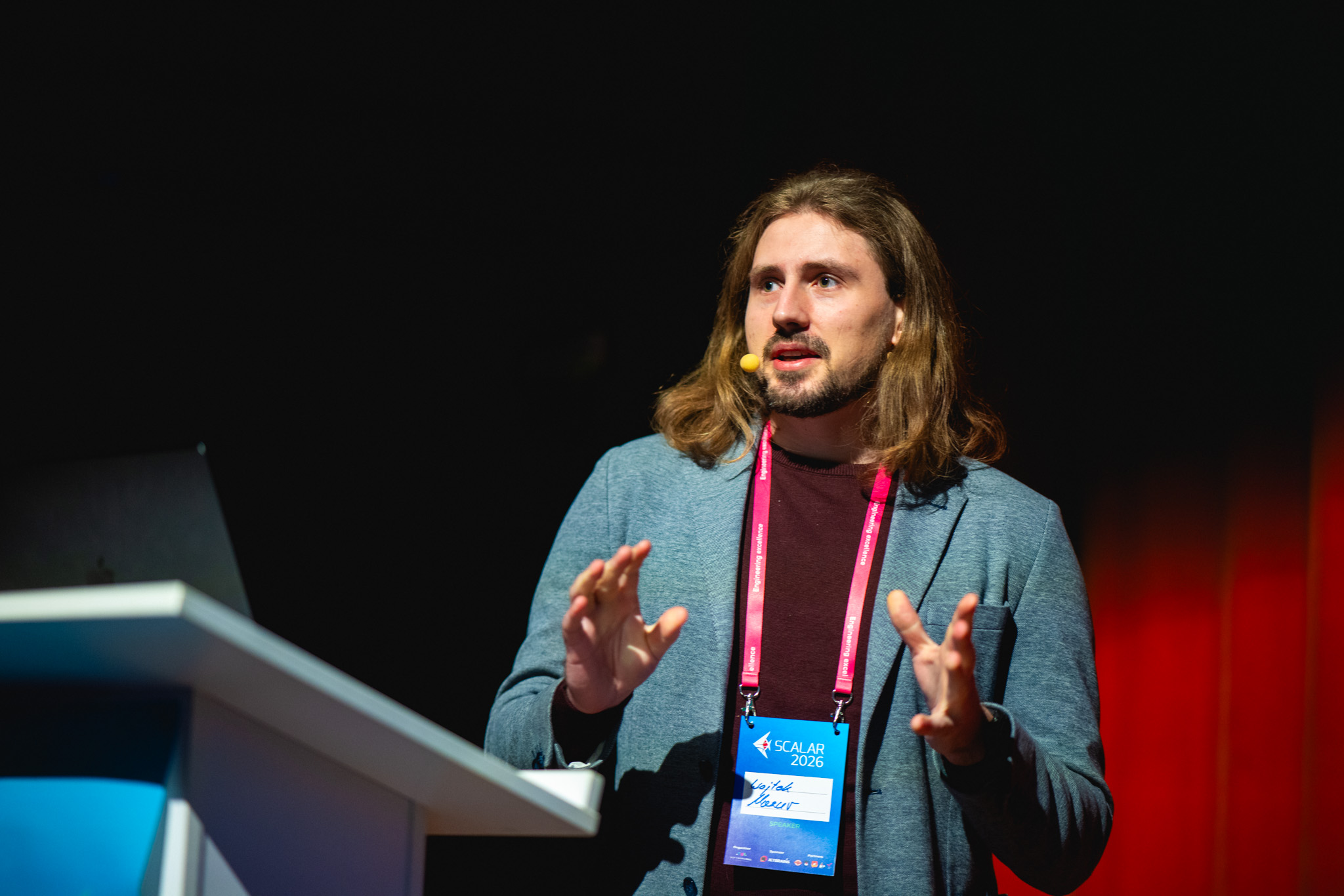
The morning peaked with Wojciech Mazur’s (pictured below) look behind the scenes of the Open Community Build. His team’s monumental task of building and migrating nearly 2,000 open-source projects every week ensures the Scala ecosystem remains stress-free and ready for every new release.
As the technical journey expanded into high-performance computing, Szymon Rodziewicz and Marcin Złakowski impressed the crowd with Cyfra, a project that brings Scala’s high-level abstractions to the parallel power of GPUs. This exploration of the hardware-software interface continued with Anton Sviridov, who demonstrated that Scala Native and C can interact "as tight as brothers," expanding our reach into low-level systems with Scala’s signature elegance.
To solve overwhelming code generation in massive projects, Pierre Ricadat introduced a "Scala-First" approach to Protobuf, offering a cleaner alternative for organizations managing tens of thousands of data definitions.
The afternoon focused on the evolving landscape of concurrency and theory. Riccardo Cardin navigated "The Concurrency Triangle," providing a needed comparison between Fibers, Virtual Threads, and Coroutines. This was followed by a lively debate led by Jonathan Winandy, who evaluated the newcomer Kyo against veterans like ZIO and Cats Effect, sparking discussions that lasted long after the final slide.
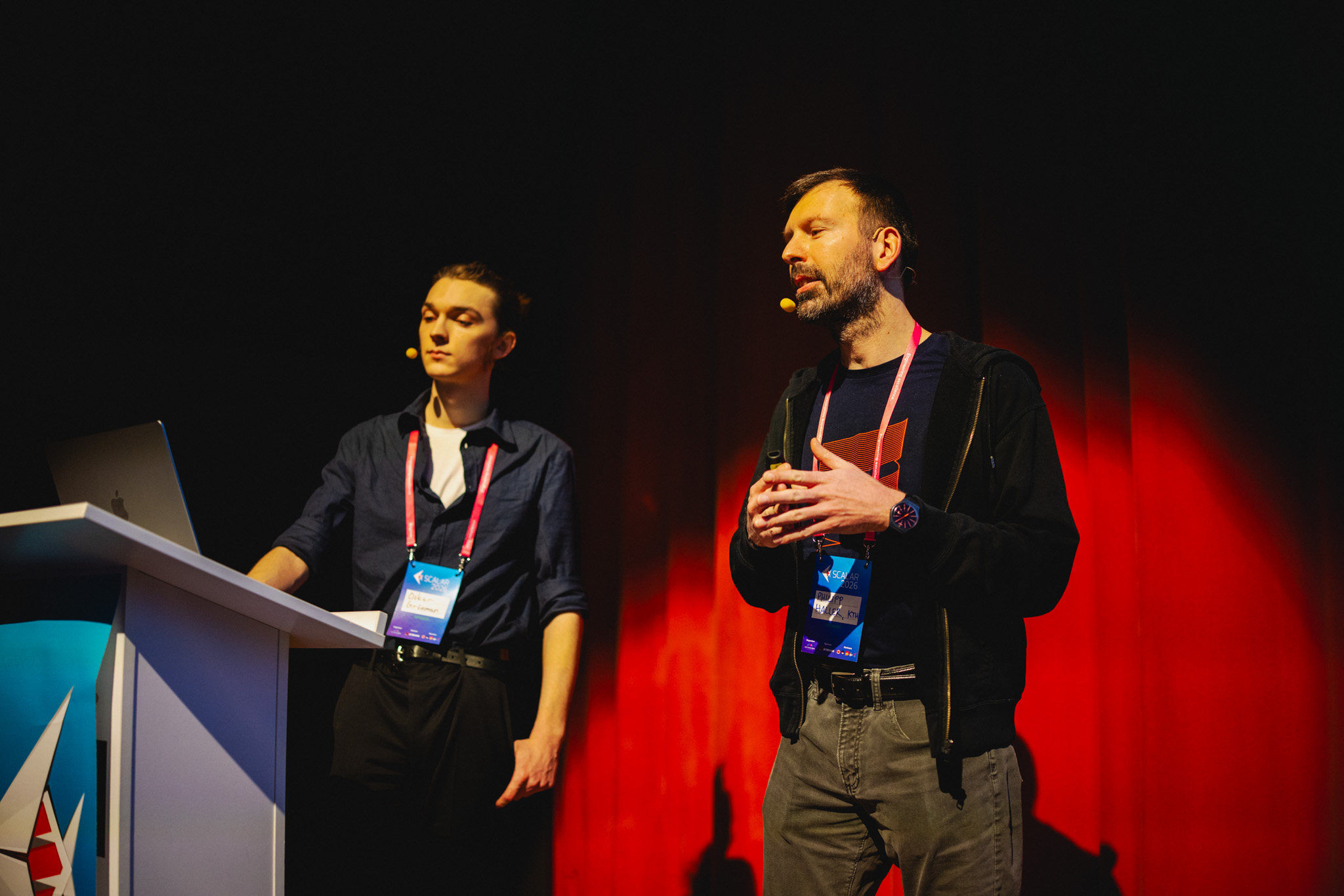
We also explored research-driven tools with Philipp Haller and Oskar Gronman (pictured below), who presented McCCT for controlled concurrency testing, while Vasil Vasilev showcased how the IntelliJ Scala Plugin is evolving to support modern virtualized developer environments.
The first day reached its technical crescendo with deep dives into mastering Scala 3. Daniel Ciocirlan delivered a live-coding demonstration of capture checking, one of the language’s most significant new features. Nicolas Rinaudo then argued for "Effects as Capabilities," showing how developers can enjoy the readability of imperative style without sacrificing the reasoning power of monadic style.
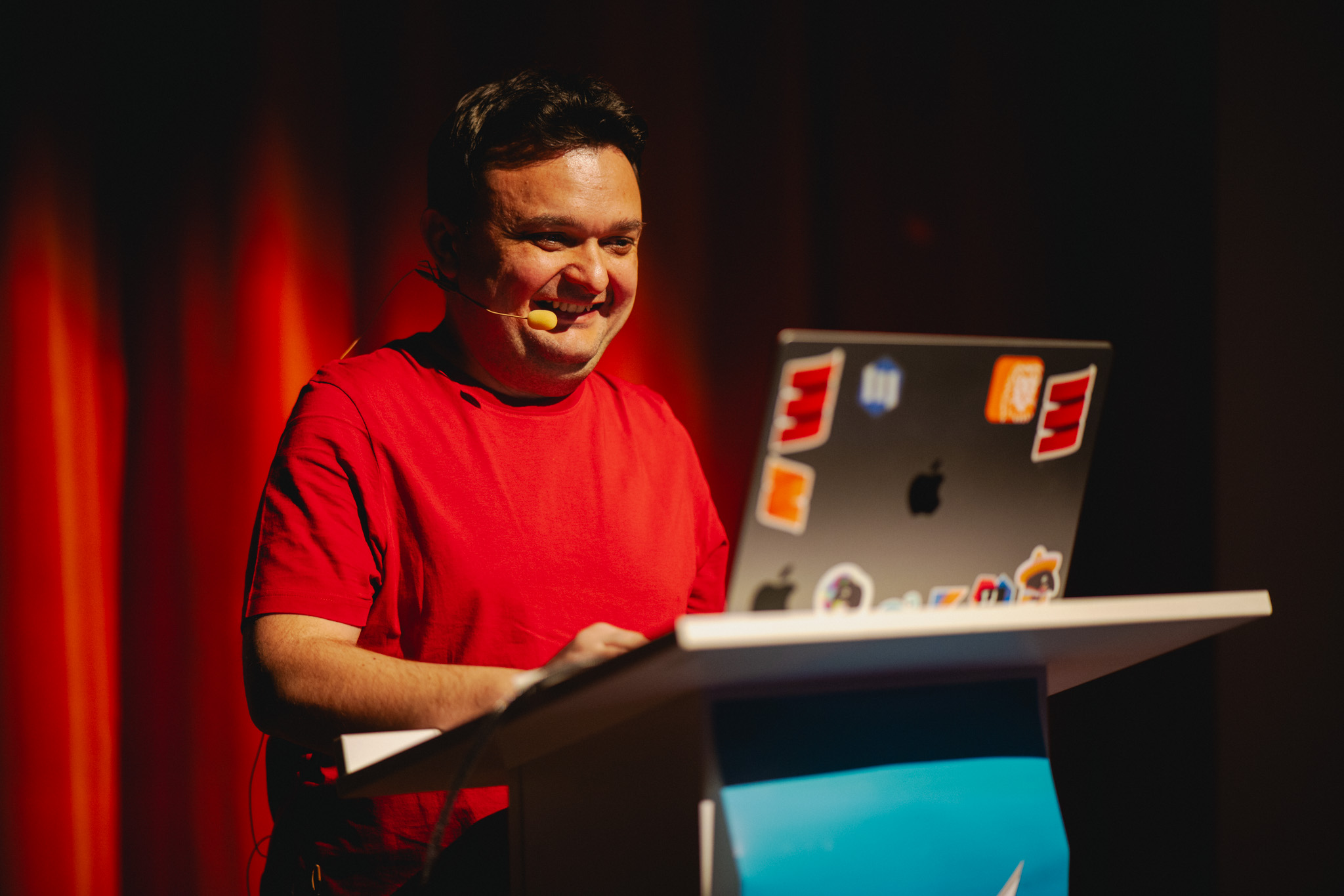
Finally, Alexandru Nedelcu (pictured below) closed the sessions with a comprehensive guide to Type-Classes in Scala 3, mastering the new rules for givens, extension methods, and automatic derivation.
Networking opportunities and the "Scalarian" vibe
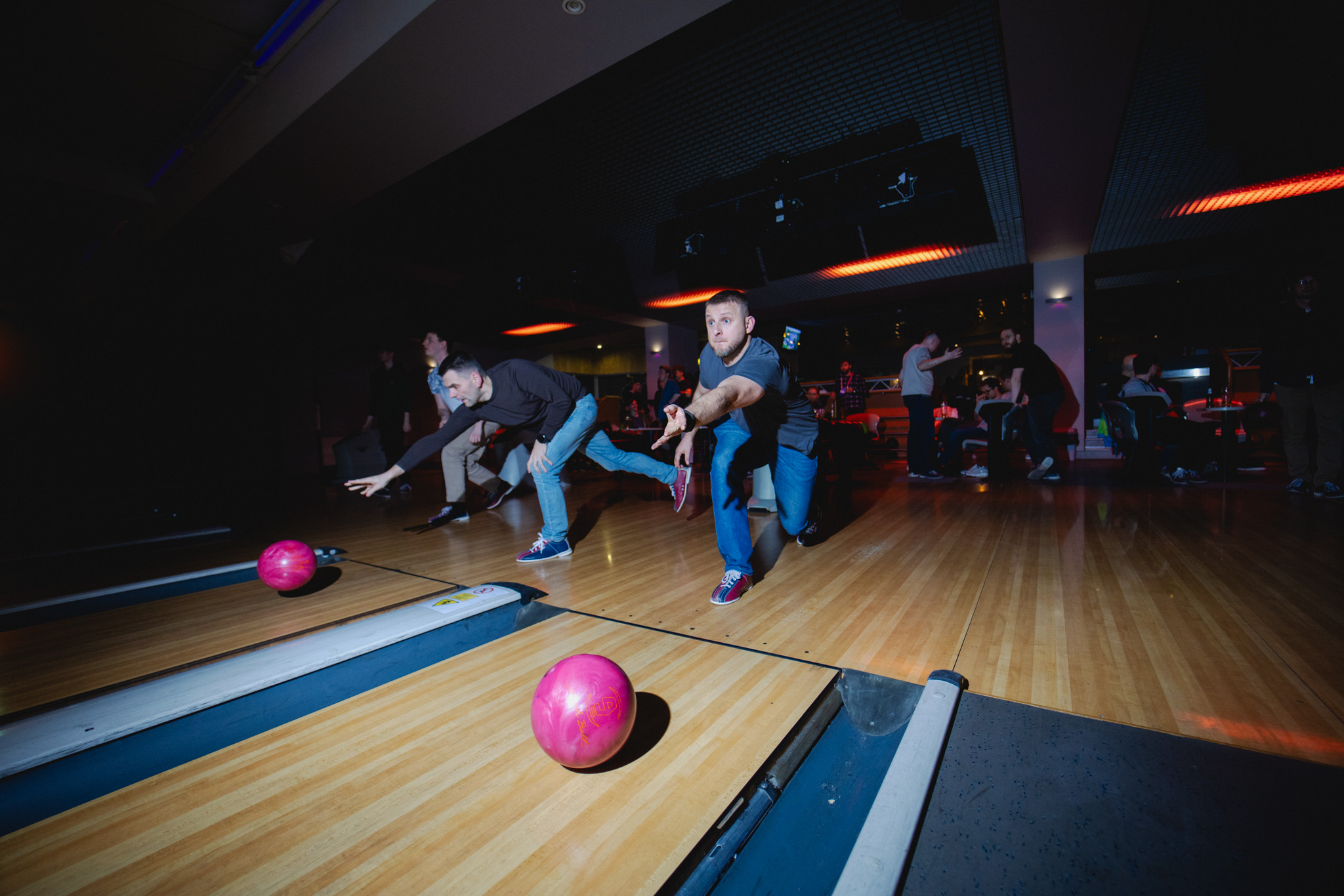
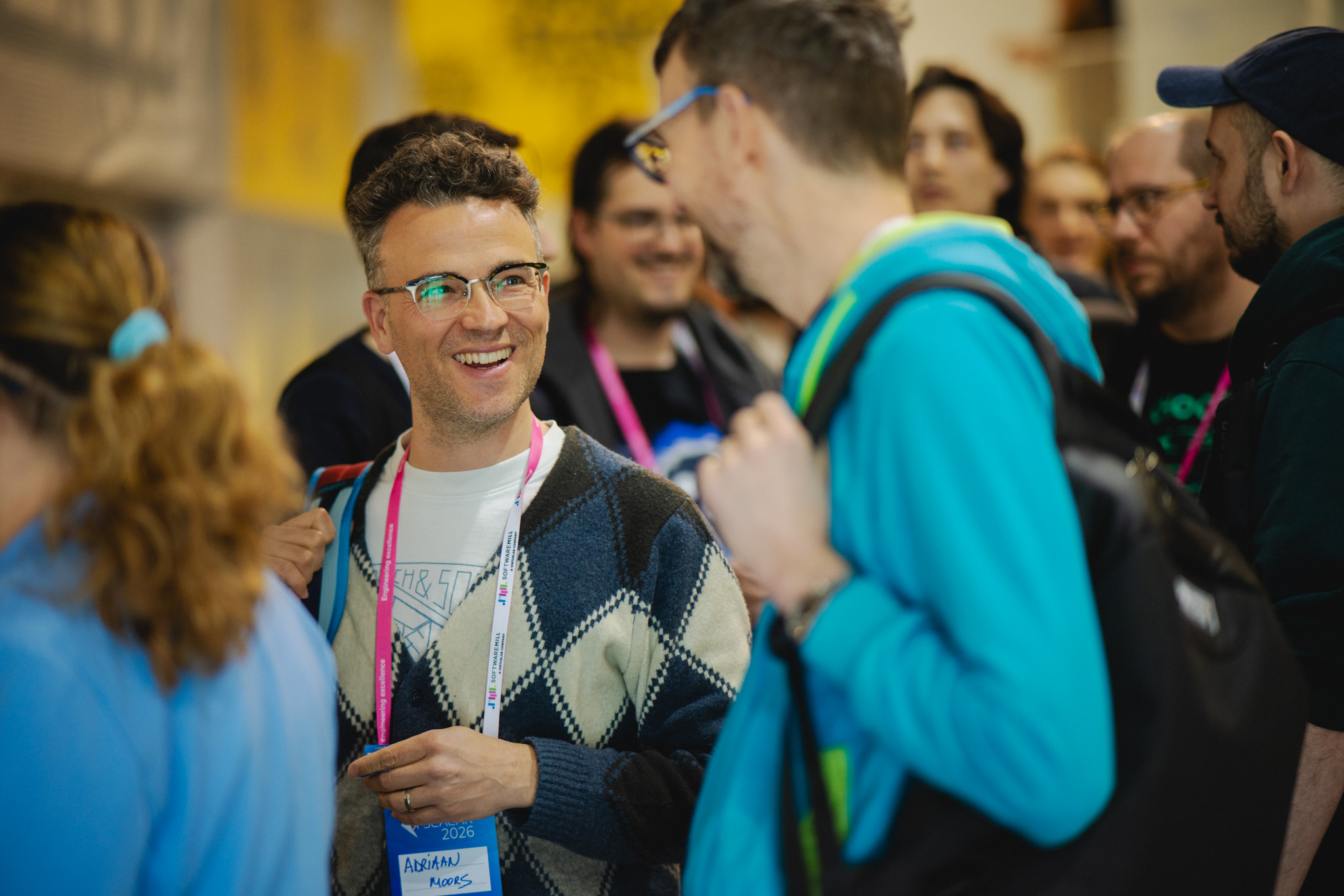
At Scalar, meeting people in the hallways is as valuable as the talks themselves. After an intense first day of code, the community moved to the official afterparty at the ARCO club. This gathering was the social heart of the event, where professional titles didn’t matter and everyone from keynote speakers to junior developers shared a drink.
Whether attendees chose to bowl the night away, challenge a colleague to a game of billiards, or relax over great food, the evening turned new connections into real friendships. It perfectly captured the vibrant, welcoming energy that has defined the "Scalarian" spirit for over a decade.
Looking for the "holy grail" of developer productivity
The second day began by refining how we structure our domain logic. Norbert Schultz demonstrated the practical power of Named Tuples in SQL libraries, showing how modern features make data layers more intuitive.
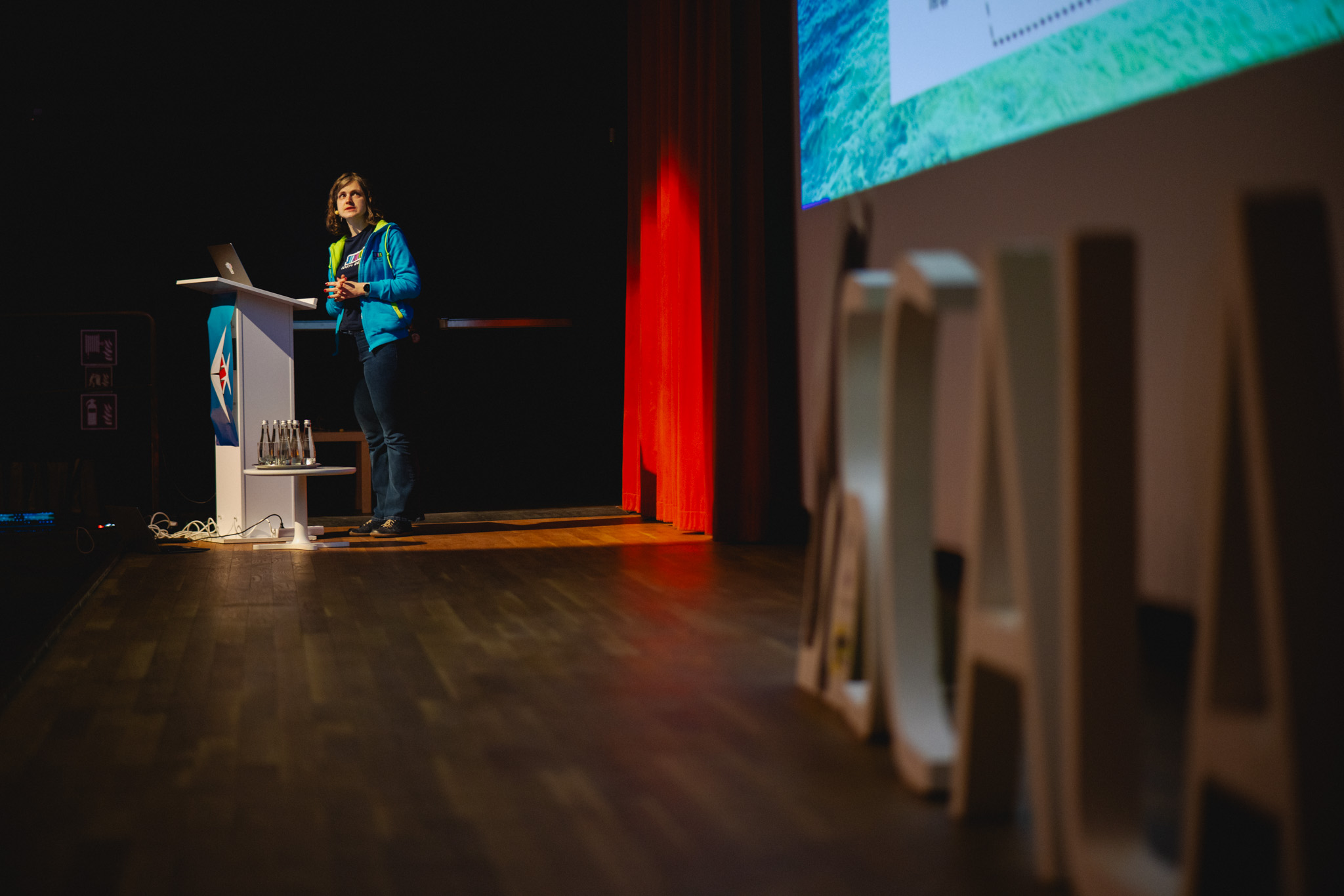
Magda Stożek (pictured below) then guided the audience through "Flexible Modeling," illustrating how to keep code clean by replacing legacy Scala 2 workarounds with Opaque Types, Enums, and Union Types.
The technical depth continued with Mateusz Kubuszok, who explored the "holy grail" of developer productivity: a Standard Library for Macros. He argued we can automate mundane, error-prone code generation without the complexity often associated with traditional metaprogramming.
The conversation then shifted to the most transformative force in tech today: Artificial Intelligence. Priyanka Bose provided a roadmap of the Scala AI Landscape, highlighting tools that boost developer productivity and methods for LLM integration.
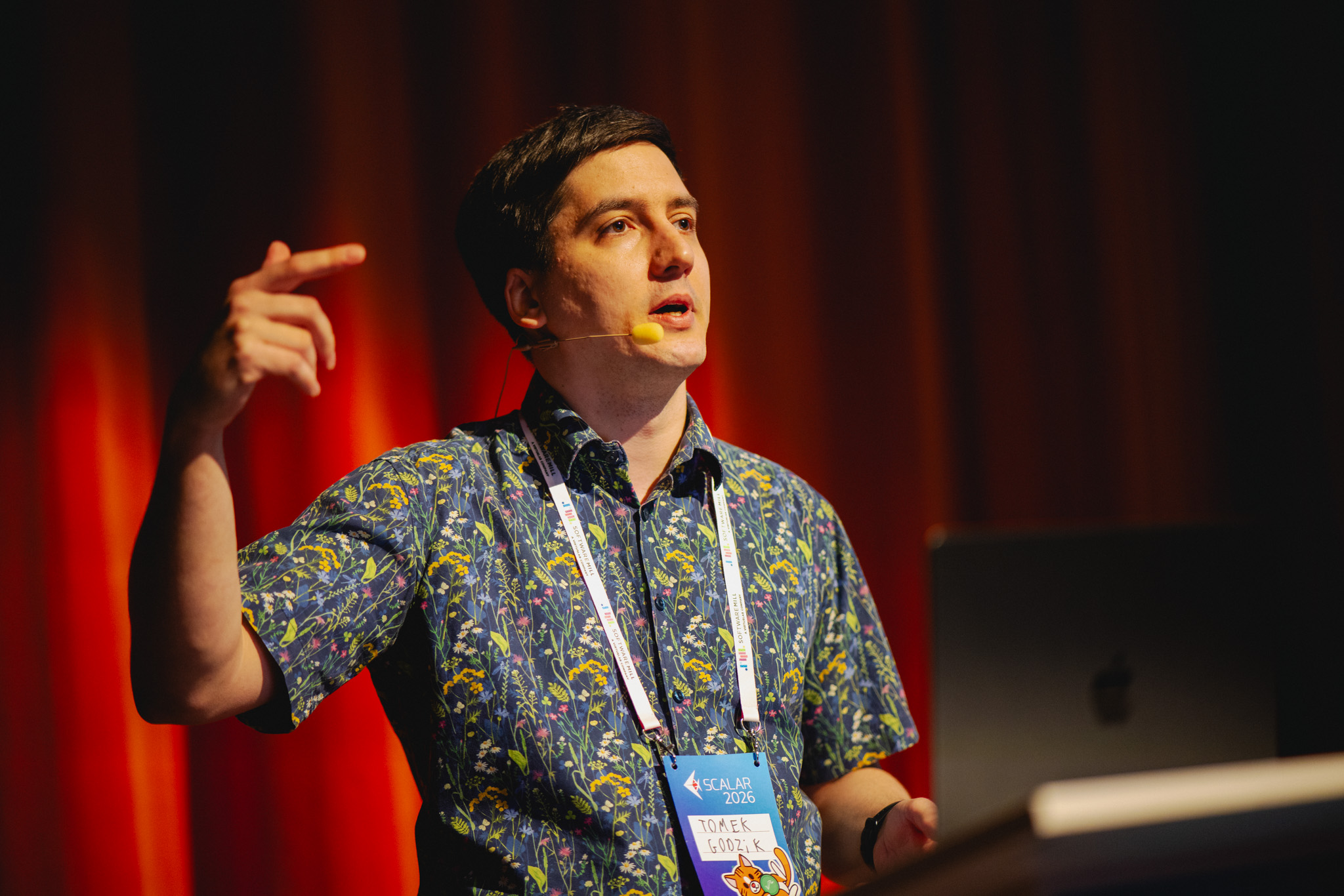
Tomasz Godzik (pictured below) followed with actionable insights from a year of Scala LLM workshops, offering practical strategies to enhance the developer experience. To address security concerns in AI, Andrei Kucharavy explored whether Scala’s robust type system could serve as a "silver bullet," providing a safety net for the correctness and security of AI-generated code.
The afternoon showcased Scala's versatility across the stack. Nabil Abdel-Hafeez introduced Datastar, a "blazingly fast" way to build backend-driven frontends with zio-http.
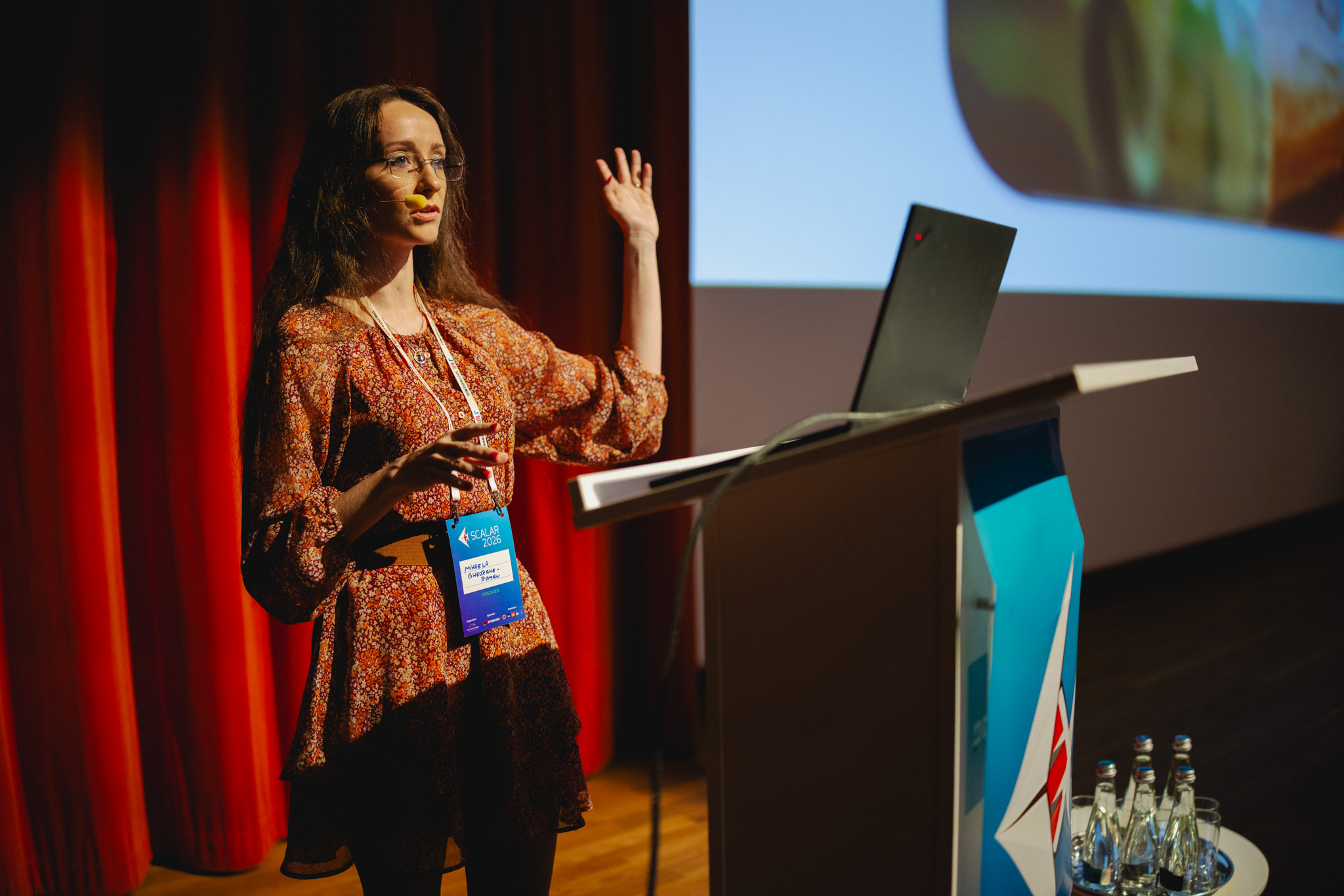
We saw cross-language synergy as Mihaela Gheorghe-Roman (pictured below) explained how they used Scala and TypeScript to build a real-time collaborative text editor that meets strict security and performance standards.
Efficiency remained a priority as Haemin Yoo showed how to automate the repetitive "busywork" of API development, from REST to GraphQL.
As the conference drew to a close, we looked at Scala as a high-powered alternative to traditional tools. Haoyi Li made a compelling case for using Scala as a scripting language, replacing fragile Bash and Python scripts with robust JVM-based Scala scripts for industrial-grade automation.
Finally, Łukasz Biały closed the stage sessions with "Rigging the game with Rig," providing a fitting technical conclusion to our 48-hour deep dive.
Big thank you to our Partners and Sponsors
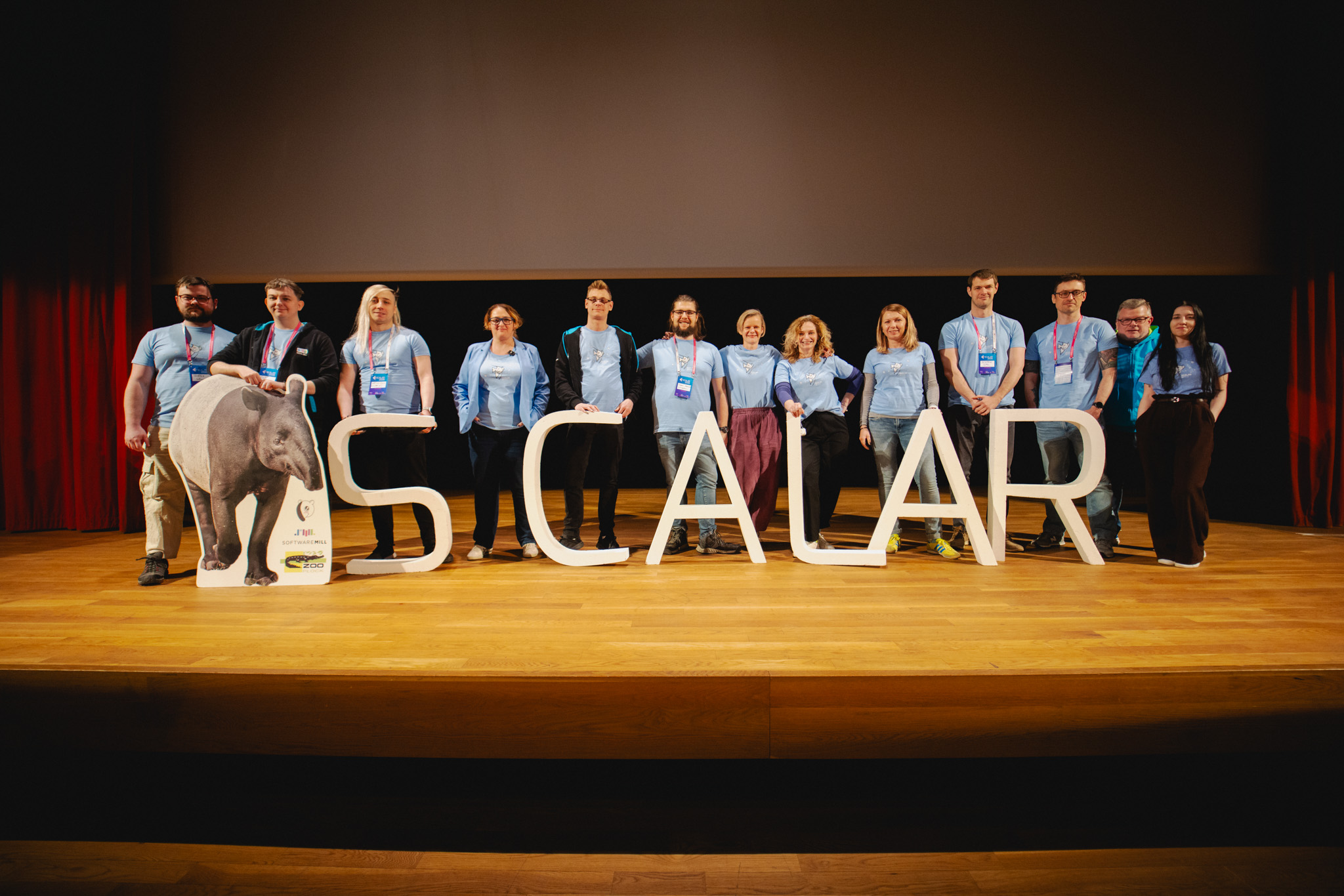
Putting together an event of this scale is a team effort. We are proud to have organized this as SoftwareMill, but our success depends on partners who share our passion for high-performance engineering.
A special thank you goes to our sponsor, JetBrains. As creators of IntelliJ IDEA, their tools are trusted by over 11 million professionals worldwide, and their commitment to the JVM ecosystem is a cornerstone of our community’s productivity.
We also thank Aikido Security for keeping our focus on safety, and our friends at VirtusLab, whose presence and expertise provided a central hub for many attendees throughout the event.
Hope to see you in 2027
Scalar 2026 was a two-day celebration of everything that makes functional programming special: the pursuit of purity, the challenge of complexity, and the joy of a vibrant community. Whether you joined us for great talks, networking opportunities, or bowling strikes, you helped make this edition unforgettable.
Talk recordings will be available on our YouTube channel soon.
Until then, stay tuned, join the conversation on LinkedIn and X, and be proud of your code!